Kollywood Should Stick To Scripts

The Cauvery water issue which has been a constant source of trouble between Karnataka and Tamil Nadu rears its ugly head ever so often. As usual the Tamil film industry (now often referred to as Kollywood) feels obliged to throw in their support and show their solidarity given that Tamil films become an immediate target when trouble erupts. As always, this results in controversies of its own adding little value to the overall issue.

Very often, these events cause more harm than good. While it is not a bad idea for celebrities to be involved in raising awareness for a cause, it would do a world of good if these individuals stick to their “core competencies”. Without a doubt all of them are capable of attracting the crowds. All of them are at their best when they deliver planned scripted lines. Unfortunately, these events become like election rallies. Instead of serving as peaceful, hunger strike-like events, the stars are obliged to indulge in public speaking (perhaps driven by the vested interests of those stars who are already engaged in politics), most often extempore. The reality is that most of these stars are incapable of delivering a coherent message when asked to speak without a script. The result is unsophisticated language, poor use of words, and ultimately a botched message to the largely adoring public. Actor Sathyaraj’s speech is a perfect example of the kind of dangerous and divisive rhetoric that celebrities must avoid. The only voice of reason in the midst of the hoopla over the stars was that of Kamalahasan, when he said, “I need Rajni, I need Sathyaraj but I also need Kumble”.

Here is a background on the Cauvery issue for those who are interested in the details.

Dems in Dilemma: More like a Bollywood Climax (from the 80s) than an Epic!

Howard Dean is clearly uncomfortable to openly call for Hillary to withdraw. Shortly after he announced publicly that the candidates’ battle must be settled by July 1, Hillary Clinton swore to fight to the very end. Nancy Pelosi issued statements about the need for super delegates to not go against the popular vote and promptly earned the wrath of Hillary supporters. Other party elders have been calling for Hillary to withdraw. In short, the Democratic party can’t get its act together though it appears as though many in the party want to stand up to the Clintons and bring an early end to this protracted race for the nomination. The immediate side effect being a battle between the two candidates that is getting increasingly nasty. On the one hand, its unfair to ask Hillary to quit simply because at this stage it looks like no candidate will win the required delegates and the super delegates will have the final say. The super-delegate system was setup to precisely decide this kind of eventuality. Besides, she could argue that she could be the better candidate against John McCain just as much as Barack Obama can argue the same. Then why quit the race?

Some like Mario Cuomo prefer a dream ticket. He calls for leadership on the part of the two candidates and for an agreement between the two that the loser will settle for the VP post. This would surely be a “fairy tale” especially because it looks like Hillary Clinton will have to settle for VP. Cuomo’s wish is highly unlikely (and most likely very acceptable to many or I dare say most Democrats) but sounds attractive on paper.

Ultimately, the current situation is a sad reflection of complete lack of leadership in the Democratic party. While some like Bill Richardson and Chris Dodd have announced their candidate affiliations others like John Edwards are playing an endless (self-serving?) waiting game. It appears as though many among the party bigwigs want to see Obama as the candidate (and/or an end of the Clinton hold on the party) but simply don’t have what it takes to achieve this. Instead of working together, isolated statements that expose a fractured party are emerging from all corners of the party further undermining its chances in November.

Senator Obama compared this campaign to a long movie while Senator Clinton responded that she likes long movies. The press refers to it as an “epic” battle. At this stage the campaign appears more like a Bollywood flick that ends with a dreadfully long fight sequence. Unfortunately, this is the time when most movie watchers leave the theater except for the die-hard fans and front-benchers. Maybe Howard Dean can join in the climax with his trademark scream! He surely can’t seem to offer more than that at the moment.

The biggest nightmare that Democrats could have now is that the final scene in the long movie might feature John McCain (in an anti-climax) in the White-house come November.

CPI(M)’s Third Alternative: The Right Idea, But the Wrong People?

The CPI(M) has mooted the idea of third alternative outside of the Congress and the BJP. At first it sounded like yet another pre-election gimmick. However, Sitaram Yechuri of the CPI(M) Politburo has clarified with some interesting points.

“Our stand is non-Congress and anti-BJP. Elaborating on third alternative, he said this would be formed based on three policies — opposing communalism, opposing “anti-people content of economic reforms” and opposing all efforts to make India a subordinate ally of US imperialism.

“This is not merely an electoral front. Differences between a front and alternative is that the former is a cut and paste job for elections. We are working on an alternative, which is for the long term and is built on a policy framework,” he said.

On the one hand it is admirable that a much needed third-force is being considered based on ideology rather a politics of opportunism. But the reality that such a credible force can be put together with the CPI(M) (of all parties) at the helm seems unlikely for many reasons.

  • Barring Kerala and West Bengal, the CPI(M) hardly has a strong presence in the rest of the country to lead such a force. The electorate in Kerala has consistently favored the opposition in every election. Going by this the CPI(M) in Kerala will probably be on its way out in the time for the next polls.
  • The ideology behind the third front is primarily a communist agenda. Its hard to see how the other non-BJP, non-Congress forces would primarily subscribe to a communist agenda (apart from the anti-communalism stand).
  • Sooner or later the CPI(M) will have to resort to a”cut and paste” operation of political opportunists merely to make the numbers in time for the polls. A delicate balance between cut and paste and an ideology based third force is hard to accomplish without a stronger country-wide presence (aprt from the two states).
  • With the BJP to the far right (despite Mr. Advani’s best efforts to draw it to the center), and the Congress on the left of center (or wherever Rahul Gandhi plans to take it!), a far Left alternative appears unlikely to gain momentum no matter how well intentioned unless the CPI(M) intends to move more to the center of the political spectrum.

Lastly, it begs the question as to why the CPI(M) has chosen to embark on this third front after being part of the UPA for the last four years.

Barack Obama on Race

http://youtube.com/v/u2i1bk7SamQ

Another brilliant speech by Barack Obama. Once again, Obama showed that he could use his oratorical skills to communicate and reach out to people across ethnic and racial lines.

It is impressive how he addressed the raging Rev White controversy by condemning his words, yet explaining his closeness to the man. A sure sign of honesty and self-confidence in a politician.

He has proven his ability to respond and indulge in “damage control” in a more than conventional way. This will be put to test more than ever where he to become the Democratic candidate. However, he first he has to translate this oratorical skill to primary victories in non-caucus states and gain the nomination.

Overall his speech was nicely blended with his pet themes of unity and change. An impressive piece of speech writing and as always, superbly delivered.

Click here for a full text of the speech.

Final Debate: Same Old, Same Old

Last night’s debate between Hillary Clinton and Barack Obama was the third and final one on one debate and her last chance to state her case. After watching this race closely it boggles my mind that despite having Bill Clinton and an army of high paid consultants on her side Senator Clinton has been unable to come up with a winning strategy.

Firstly, there was no substantial difference in her approach last night. Secondly, Senator Clinton seems to take a stay the course strategy, quite surprisingly. Senator Obama on the other hand seems to be growing in strength and stature with each debate.

Why Bicker over Health Care

Most voters are not aware of the details and in most cases aren’t even interested in them. So to bicker over whose plan covers what is a meaningless argument. It is completely ridiculous for Senator Clinton to continue to focus on this when there are plenty of experts to beat the details to death and argue over them. At last night’s debate she continued making a huge deal about the differences in the health care plans.

Why Claim to be the Candidate of “Change”

The concept of “change” has been completely co-opted by Obama and co. There is absolutely no point in fighting over the fact that she can bring about better change without a convincing rational. Thankfully, she mentioned it only in passing.

35+ Years of Experience

The focus here appears to have been more on her experience and less on Senator Obama’s lack thereof, with the result that the 35 years has become an issue of debate in itself! Unfortunately, this is probably Senator Obama’s only weakness at this stage of the race. However, he does a fine job of covering for it by legitimately claiming to have good judgment (war in Iraq being an example).

Attacking Senator Obama’s lack of experience does create a tricky situation. She could be jeopardizing her parties’ candidate by driving home this point, where he to become the ultimate nominee. At last night’s debate she chose not to attack him openly for lack of experience instead highlighted hers. She deserves credit for taking the high road here, but the truth is that she can’t hope to win the nomination without taking this issue head-on.

Cribbing Doesn’t Help

Senator Clinton raised the issue last night that the press was giving Senator Obama a free ride (a fairly valid claim. Putin’s hand-picked successor question being an example). “Cribbing” of this nature is best left to surrogates and smacks of desperation when coming from the candidate herself. Again, a a failure of her strategy team.

Please, No More Debates!

Lastly, these debates should stop. Hopefully there are no more. Senator Clinton has no new strategy in place, making these debates dull and boring to say the least. It gives the voters no new insights and is a complete waste of air time.

US Election Thoughts: Hillary’s Uphill Battle

The Clinton campaign officials have recently been shuffled around. She has lent her campaign $5M. She wants to debate Obama, while he prefers to be on the stump instead (quite understandably). Bill Clinton’s race card attempt backfired and his core voting block of African Americans seem to be firmly in the Obama camp. Women and older folks seem to be gravitating towards him, white Americans clearly don’t seem averse to an Obama presidency, and Hispanics could be next in line to be swept by the Obama wave.

The Obama mania seems to have swept the country. His cries for change accompanying his impressive and powerful oratory has captured the imagination of many, especially the young. The Obama campaign is managing to raise huge amounts of money (approaching a record of 1M donors) while the Clinton campaign is clearly stretched.

In short, Senator Clinton faces an uphill battle. Can she start winning again after 10 straight loses?

Operational Failures

Senator Clinton has run a long and tough campaign but clearly the momentum has shifted to Obama. About a year back, Senator Clinton was widely believed to have a war chest of cash. Despite hordes of cash, a clear head start and plenty of name recognition the Clinton campaign has faltered. How It begs the question as to how Obama has a better ground operation (purportedly the reason for his caucus victories) than Senator Clinton does? Did they under estimate him or is he simply better on the organizational front?

It is hard to imagine that Senator Clinton can reverse the momentum when the campaign appears to have faltered on a fundamental aspect of operations resulting in lost caucuses and shortage of cash. It is commendable that a young, relatively unknown first time Senator has won a string of victories to challenge the front-runner who claims to have “experience”. It is arguable that given enough time Obama might have picked up California and possibly Massachusetts.

Experience vs Change

There is no question that she lost this argument for the most part partly due to poor campaign strategy. After 8 years of George Bush and a clear move to the right, the country is more than ready for change. Without a doubt, Obama has grabbed the right narrative so to speak and has run with it. His campaign themes of “turn the page”, “yes we can”, “fired up and ready to go” seem to have taken center stage and are starting to resonate both with the people and the media. In fact, John McCain used it the other day when he said “I am fired up and ready to go!”

Interestingly, Senator Obama has been able to achieve this despite the fact that some (I suspect “many”) of his supporters have little insight into his legislative accomplishments! (If you are wondering the same, click here for a brief!)

Never Say Never. So What Next?

Though it does appear a hard road ahead for Senator Clinton, she could still stage a comeback like she did in New Hampshire. The victory there was possibly influenced by the teary-eyed moment. It appeared genuine and it certainly worked for her. So don’t be surprised if an encore is being planned by her political consultants as a last ditch effort to turn the tide.

The upcoming debates should give Senator Clinton a chance to regain some ground. In general, Obama seems to do better when giving speeches. On the other hand, Senator Clinton seems especially more comfortable in a relaxed table and chair setting than he is. If she succeeds in raising some doubts in the minds of the people about Obama in the debates and subsequently holds on to Ohio and Texas, then there could be an outside chance for her to claim the nomination. If not, it appears to be game over for Senator Clinton.

Obama vs. McCain

A defeat for Hillary Clinton will please many, especially the Hillary-haters. But it is bound to make many in the Republican camp nervous because Obama might prove to be harder to beat in the general election. While its easy to brush aside Obama as “all oratory and no substance”, if Obama were to be the Democratic candidate, it is impossible to ignore the contrast with Senator McCain (with all due respect), who comes across as absolutely low on energy, hope and inspiration. This could be a tired Bob Dole-Bill Clinton-like match up all over again. Unfortunately for the Republicans, there wasn’t much to chose between an erstwhile Senator McCain, a slippery Romney and the smooth-talking Huckabee.

The Protracted Primary

The long primary is likely to favor the Democrats than hurt them. Firstly, it gives them an opportunity to raise more cash. Secondly, they get to remain in the news and grab “mind-share” of the public, unlike the Republican race which is more or less settled and lacks the glamor. Besides, if Obama were to be the candidate, a long primary helps him gain name recognition across the country.

p.s: If want to know were the candidates stand with regard to your own views on various issues try this or this.

YouBama for Obama!

Check out this newly launched site dedicated exclusively to Obama supporters. Antyone can upload a video stating why they are supporting Obama or link to a video that you already have on Youtube. Visitors to the site can view the video and vote on it, Digg style. Goerge Clooney’s endorsement appears at the top.

It is an “unofficial presidential campaign for Barack Obama”.

One more really cool by-product of the Youtube age in politics.

Book Review: Confessions of an Economic Hitman

ConfessionsTitle: Confessions of an Economic Hitman
Author: John Perkins

The author worked for several years for consulting firms that encourage under developed (and developing) countries to accept large loans from the World Bank (and other similar institutions that provide financial aid) for large projects with the basic intent of eventually controlling the local governments and their policies to serve the needs of American Corporations. He calls it “corporatocracy”.
“Economic hit men (EHMs) are highly paid professionals who cheat countries around the globe out of trillions of dollars,”….If we falter, then a more malicious form of hitman, the jackal, steps to the plate. And if the jackal fails the job falls to the military.”

The EHMs cook up projections about the implications of these projects (often large infrastructure projects) in order to convince these countries to accept these loans. Also, a number of locals are bribed in the process if need be. The loans are then paid to US Corporations that service these projects. Ultimately, these governments are unable to pay back these loans and become proxies that serve US interests.

The book serves as a very good work of fiction. But it is highly likely that there is some truth to this book. Unfortunately, the author glosses over details of projections that he claimed to have “cooked” up as part of his job. This certainly leaves plenty of room for critics to rightfully argue the credibility of the authors story. While the underlying theme of the book is highly plausible, it is hard to say how much of it is really true vs. pure fiction. Ultimately, it is an interesting and engaging book.

The book covers the author’s first hand experiences in several countries including Indonesia, Saudi Arabia, Panama, Ecuador etc. The Saudi Arabian part is of particular interest in light of recent global events (the rise of Bin Laden, 9/11 etc.)

If you are a pro-environment, anti-big Corporation, and in general left leaning, and prone to alarmist tendencies, this is a book that is sure to confirm your worst fears. You are bound to have the “I told you so” moment on reading this book. In any case, a must read for anyone interested in geopolitics.

p.s: I love the cover design.

Obama’s Speech Writer

http://youtube.com/v/Kf0x_TpDris

If you are a fan of Senator Obama’s speeches, you must have wondered, who his speech writer was. The NY Times did a story on the lead speech writer, a 26-year old (!!), Mr. Jon Favreau. Very impressive indeed. This is just one more sign that an Obama Presidency is bound to bring hordes of young, talented people to the forefront of American politics.

But for now, Obama has to win South Carolina, convince John Edwards to quit and endorse him, and beef up his chances for super Tuesday in the big states. As of now, this seems like an uphill battle!

Check out one of Obama’s recent speeches. Notice how he starts of slowly and gathers steam as he progresses.

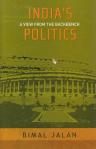
Book Review: India’s Politics

Title: India’s Politics — A View From The Backbench
Author: Dr. Bimal Jalan

The author was the former head of Reserve Bank and then went on to become a Rajya Sabha MP.
The underlying theme of the book is that coalition Governments at the center are here to stay. This trend brings with it its own set of issues and if not addressed soon enough could result in further deterioration of the political system as whole and hurt the country and its standing in the world in general. The author is careful not to mention any individuals per se despite discussing specific issues and events. In other words, the book is more about the political system in India rather than about personalities. The book discusses the challenges of India’s current political system and offers a reform agenda.

Here are a few (but by no means all) of the points raised in the book.

Coalition Governments: Given that coalition governments are here to stay, the author calls for coalition partners to agree on a common set of social and economic policies rather than enter into an opportunistic arrangement of convenience. The author argues that these smaller entities must be considered as part of the coalition (UPA, NDA etc.) and not as separate parties for the business of parliament. Any differences must be sorted out within the entity as opposed to in public.

Collective Responsibility: The Indian constitution was based on the principle of collective responsibility of the council of ministers. This principle shields individual ministers from being held accountable for their performance while it has not prevented them from taking decisions without seeking a minimum consensus from coalition partners. The author provides examples to illustrate this phenomenon.

Anti-Defection Law: Coalition governments have resulted in small parties with less than 5% of the national votes wielding unusual power. They even control ministries by virtue of their being part of the ruling coalition, but with little accountability. The author suggests that the anti-defection bill must be amended to disqualify members of a party with less than 10-15% of the seats in the Lok Sabha who opt to join a coalition and then defect.

Business of Parliament: The last few budgets have been passed without discussion! The author says its imperative to bring in a rule that you can’t pass the budget with a voice vote.
Inefficiency: There is too much inefficiency in public services. There are way too many agencies, schemes, departments etc (created by different ministries) often working at cross purposes and politicization of administration in general (“In recent year, the politicization of the bureaucracy has gathered further momentum as a result of governments with shorter tenures pursuing their private or party interests in the guise of promoting the larger public good”). Ultimately, these inefficiencies affect the poorer sections of the society and contribute towards increasing the disparity between the rich and the poor.
Security/Law and Order: The national boundaries and the armed forces are the responsibility of the central government, the responsibility of internal law and order is the responsibility of the state. The states unfortunately are increasingly becoming incapable of addressing law and order issues. (“One-third of all Indian districts are now believed to be under the influence of Naxalite organizations”). Ministers in power in the state tend to control and interfere in the administration of law and order. The authors recommendation is to redefine India’s overall security and law and order management with a greater control and co-ordination from the center especially to respond to terrorist threats orchestrated by external organizations which have a global reach.
A well written book, that is a must read for anyone interested in India’s politics today and into the future. I found that the book tended to get repetitive at times. Perhaps, the author was doing this for emphasis sake. There was no mention of the events at Godhra in 2002 and how events like this can be avoided, which was a disappointment. But overall a very informative book from someone well versed in India’s economics, politics and everyday challenges.