Hats off to Dhoni For Opting Out

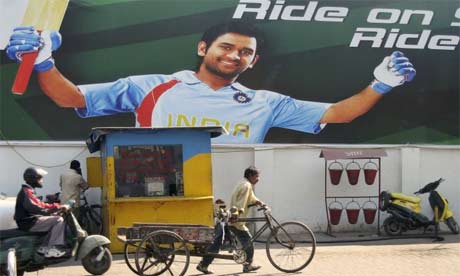
Dhoni MS Dhoni chose to pass on the upcoming Test series in Sri Lanka and deserves plenty of praise for this. It is perhaps the first time in Indian cricket history that a player so young and on the rise has willingly stepped aside from a Test tour. Firstly, it reflects a clear sense of self-confidence in the man. Secondly, it is a sign that he suffers from no insecurity whatsoever. A welcome sign in India’s ODI and T20 captain and possibly future Test captain. It appears that he has come to realize that with the cricket being played virtually throughout the year, it is impossible to feature in every game and still maintain top quality performance. Besides he has come to the realization that maximizing participation in the short term could come at the expense of longevity at the top in the long run. A shrewd sportsman’s brain at work, no doubt.

Interestingly, Dhoni’s decision comes in the wake of Ricky Ponting’s recent comments about Test cricket being under threat. Dhoni decision does raise some interesting questions. Has Dhoni started a trend where the younger generation (which thus far swears by Test cricket as being the ultimate) begins to focus more on the shorter versions of the game? Is Test cricket going to be relegated to veterans cricket of sorts? Does the money tied to Test cricket need to be increased by the Board? Does Test cricket need some fresh thinking to come up with new rules — four day Tests, limited number of overs etc.

No matter what the repercussions of this decision, Dhoni deserves credit for taking this step. The likes of Saurav Ganguly who still aspire to drag themselves into the ODI team would do well to learn from Dhoni.

Dhoni Strengthens Hold Over Team Selection

DhoniDinesh Karthik’s exit from the ODI was on the cards. The big three Rahul Dravid, Ganguly and VVS Laxman are unlikely to play ODI again for India. Sachin is injured and Harbhajan is serving his sentence. The injured Sreesanth has just been replaced by the impressive Goni. With this, India’s team for the Kitply Cup extends Dhoni’s virtually complete control over the team selection. He initiated the changes he desired on the Australian tour and refined it further on this tour. If Dhoni can continue to show results like he has done so far, the transition to a strong established ODI and T20 leadership will soon be complete.

Rahul Dravid once lamented that he did not get the team he wanted. Dhoni has done well to achieve precisely that in a very short time. Hats off to the young man! In a country where there is so much of “push and pull” it is commendable that a small town player who was barely known a few years back, and hardly ever captained a side has had such a meteoric rise not just to prominence but to one of power. What is interesting is that despite his relative lack of experience he can’t seem to do any wrong! His recent T20 leadership in the IPL league was commendable as was his performance Down Under. Without a doubt, Dhoni has led from the front, made bold decisions (like dumping the seniors) and extracted the best from the youngsters.

The only remaining relative old timer is Virender Sehwag and based on the talent available these days (Uthappa, Gambhir, Yusuf, Asnodhkar), he could be the next one to be axed. After the infamous slap-gate its hard to imagine everything being hunky-dory between India’s two hot heads — Bhajji and Sreesanth. In all likelihood, one of them is likely to be phased out and all hands point to Sreesanth given the competition he is faced with and Dhoni’s recent comments on the issue which appear to lean Harbhajan’s way.

While Bangladesh continues to disappoint, India-Pakistan matches should still be of interest. India would do well to rely on form and this means picking Yusuf Pathan, Goni and Suresh Raina in the playing eleven. The team for the match against Pakistan will be as follows (likely):

Yusuf Pathan, Gautam Gambhir, Suresh Raina, Yuvraj Singh, Rohit Sharma, MS Dhoni, Irfan Pathan, Piyush Chawla, Praveen Kumar, Goni, Ishant Sharma.

IPL: The Semi-final Line-up, Top Stars, and the ICL

Money in RupeesA new format of the cricket game targeted at the world’s leading cricket market appears to have become a bumper hit for all and sundry. The three hour duration combined with the day-night schedule has managed to attract a new set of cricket audiences among families with small kids in addition to the already cricket crazy Indian public. Based on media reports, the turn out at these matches and the general interest level, it appears that the IPL is a resounding success and as Dravid said “IPL is here to stay“. Besides, the fact that the IPL has become a B-school topic of study is another indication that big bucks are involved. From a business perspective, the organizers seem to have clearly hit the “sweet spot” of commercial cricket. Fast and furious, quick and dirty (from a cricket traditionalists point of view), movie stars and scantily clad cheerleaders, sixes and fours galore, music and food — its all there, the ultimate Americanized package fine-tuned for the fast rising obsessive Indian consumer.

Understandably, cashing in on the wave the organizers have hiked up the ticket prices significantly.

Prices have been hiked from two to 20 times – depending on the stand – for the semi-finals at Wankhede Stadium and the final at the newly-built D.Y. Patil Stadium. A seat in the air conditioned box will cost as much as Rs.25,000 at the Wankhede for the semis, and it will go up to Rs.35,000 for the final at DY Patil Stadium. See full report.

With about 50 games completed and the final four of the IPL decided here are a few observations that come to mind.

Big Bucks and Big Names Don’t Guarantee The Best Performance

Ironically, the most four expensive teams didn’t make it to the final four. Deccan Chargers, a team with the likes of Symonds, Gilchrist, Afridi, and Gibbs, easily some of the biggest hitters in modern day cricket ended up at the bottom of the pile! The Bangalore Royal Challengers clearly suffered from a case of poor team composition. Mumbai had the excuse that it missed Tendulkar in the early part of the IPL and had to subsequently deal with the Harbhajan mess. To be fair Mumbai lost a few close games. As for Kolkata, they were too dependent on the foreign players and they never really recovered after their departure.

Struggling Big Four

There were a lot of questions raised about having the senior players who are pushing 35+ in the T20 teams. At this stage of the tournament these questions remain and the answers don’t appear to favor these big stars. Barring Ganguly who produced one fighting knock none of these big stars really produced any memorable match winning innings while lesser known stars like Shaun Marsh, Yusuf Pathan, Rohit Sharma, Venugopal Rao, Badrinath and Gautam Gambhir impressed throughout the series. Highly rated (and expensive) upcoming stars like Ishant Sharma, Robin Uthappa and Virat Kohli also failed to live up to their promised potential. Ultimately performance matters and there are quite a few players who could probably be phased out in time for the next season (or have their contracts re-negotiated!). The big stars will continue to be around more for their star power than for their cricketing prowess. Interestingly, the teams lead by the next generation of Indian captains Dhoni, Yuvraj and Sehwag qualified for the semi-finals.

Warne Shows His Class, Yet Again

There is no question that Shane Warne is one of the all time greats in cricket. His performance as captain this IPL has been most impressive. Whoever chose Warne to lead the team deserves special kudos and possibly a place on the Indian selection committee! The decision to have Warne lead was a master stroke. He has turned his relatively weak team (on paper) into a formidable force in the IPL. It will be interesting to see how his team performs in the final four.

Top 10 Players: Desi vs. Videshi

Shane Watson, Shaun Marsh, Kumar Sangakkara, Yusuf Pathan, Gautam Gambhir, Rohit Sharma, Glenn McGrath, Sohail Tanvir, Piyush Chawla, JA Morkel.

This would be my top 10 valuable players in the IPL so far. Notice that only four out the 10 are players from India. Besides, there were other foreign players (Hayden, Symonds, Taylor etc.) who might have made the list if they didn’t have to leave the series sooner than they did. In other words, many of the top players in the T20 format are not from India. While the IPL has been a great opportunity to seek out some new young local talent, it did also highlight the fact that despite being the current T20 champions India has less than a handful of players who can claim to be among the top T20 players in the world. Besides, if the level of the game has to be upped a notch, maybe the four foreign player limit in the teams must be relaxed just a bit, to maybe five.

The Final Four

The four teams in the semi-finals are well-matched, though based on recent performance and consistency Rajasthan and Punjab appear to be the two top teams. Given the uncertainties in T20 it is pretty much any teams game. My prediction (I have seldom been correct) is for Punjab-Rajasthan final.

Hopefully, the pitches are tailored to suit the bowlers so there is at least some even contests as opposed to batsmen dominated games.

ICL vs. IPL

The success of the IPL and the relative failure of the ICL is ample proof of the unfair monopoly that the BCCI holds over cricket in India. The BCCI essentially co-opted the ICL idea (crushed the ICL with several roadblocks including access to grounds, banning of players etc.) and used their reach and muscle to achieve a what appears to be mind-boggling success. One can’t help but wonder what the future holds for the ICL.

Harbhajan, Sreesanth Get Off Easy

The BCCI’s quick decision to put “slapgate” to rest by issuing Harbhajan Singh a five ODI ban was as lame as it gets. It has been clearly established for the record that Harbhajan Singh slapped Sreesanth. Moreover, Harbhajan was captaining the Mumbai Indians when this happened! Without a doubt it was an awful on the field act for a sportsman. This is all the more a serious issue because cricket mania in India is at its peak. The game is flush with cash. On the field antics by players (particularly from India) is at an all time high. Yelling, screaming, making faces, using curse words and abusing the opposition seems to be the order of the day. The general perception these days is that if you don’t do any of these on the field you simply aren’t aggressive enough for the sport anymore. Unfortunately, these players are de facto role models that young aspiring sportsmen strive to emulate. Considering these aspects, the punishment meted out to Harbhajan comes across as a complete a joke. It was a perfect opportunity for the BCCI to send the message to all and sundry that such acts will not be taken lightly. A minimum of a one-year ban was in calling to say the least.

There also appears to be evidence to show that Sreesanth instigated the slap by abusing and taunting Harbhajan’s team mates despite a warning from him. It is shameful that Sreesanth got away with a mere warning letter! Both these players are notorious for their on the field behavior and the least the BCCI could do (armed with ample evidence) was to rein them in with a strong punishment. This would have sent a message not only to sports fans and cricketers in India but also to other cricketing bodies around the world that the BCCI is tough and firm when it comes to discipline. Instead the BCCI has chosen to use some meaningless “legalese” to quickly get past this shameful act.

Sudhir Nanavati, the BCCI’s probe commissioner on the incident, explained that though Harbhajan was guilty of a Level 4 offence under ICC rules, the punishment for physical assault prescribed in the Indian board’s rule book fell under a particular clause – 3.2.1, in this case. “It’s still a Level 4 offence, but the prescribed punishment is under this particular clause,” Nanavati told Cricinfo.

The whole point of a punishment is to deter future acts of a similar nature. It remains to be seen what effect this has on Bhajji and Sreesanth’s behavior in the future. It is highly unlikely however that this punishment will do anything at all to deter other hot heads of Indian cricket from staying within the bounds of acceptable on the field behavior.

Charu Sharma’s Firing: Accountability in Cricket?

Royal ChallengersThe firing of Charu Sharma the CEO of Royal Challengers is probably the first and quickest instance of action being taken against cricketing management. There is no question that thus far the Bangalore Royal Challengers have been a dismal flop on the field. None of the young local players have fired. Jacques Kallis who has been persisted with throughout seems completely unfit for T20. Dravid himself is struggling to find his feet in this form of the game. Sunil Joshi who has a history of being a good all rounder is way too over the hill. His sluggishness on the field makes him completely unfit for T20. Misbah, Cameroon White, and Boucher the leading T20 players among the lot haven’t been utilized to the best. In short, the Royal Challengers have been in complete disarray.

Based on the performance so far, it appears as though the basic theory that experienced players can adapt to T20 was flawed. Rahul Dravid and Martin Crowe are the proponents of this theory and ideally one of them should have been taken to task. Charu Sharma on the other hand was just a visible celebrity face to lead the management. Charu Sharma was fired perhaps to send a warning to the rest of the team that poor performance could have serious repercussions (or he might have been the easiest to get rid off given the nature of the contracts). Unfortunately, the Royal Challengers losing streak continues and appears unlikely to turn around despite coach Venkatesh Prasad’s claim that Bangalore should be among the top teams!

The best news about this recent move by Vijay Mallya to fire Charu Sharma is that Corporate India might be bringing in much needed accountability to the world of Indian cricket. Hopefully, some of it will rub off on the BCCI which is badly in need of some professional management.

A Sad Day for Bay Area Cricket

Around 4.45 pm on Saturday 4/19/2008 Syed Faqeer Ali died while playing cricket in Fremont. He was representing a local team in the Northern California Cricket Association (NCCA) league. He is survived by his wife and 3-year old son.

I have never met or seen Faaqer but have had the privilege of interacting with his Dad, Abid Ali a former Indian Test cricket player. I have very fond memories having played in the same cricket league in the past and naturally I was deeply disturbed to hear this news. My heartfelt condolences to his family.

NCCA is raising funds for Syed’s family. See news report in the Mercury News.

IPL: Trends in T20

tactics and strategy

T20 is clearly a new format and the strategies and theories that apply to other forms of the game don’t really belong here. In other words, there are no experts. With the IPL well underway the initial set of matches has shown a number of trends. The jury is still out on whether these trends signify long term patterns, but here are a few observations on what seems to work/not work in this new form of cricket.

Prolonged Stay At The Wicket Without A Healthy Run-rate Doesn’t Help

In 50 over ODIs, staying at the wicket almost always helps because acceleration at the end is possible for several reasons – the field team tires out, the batsmen are well set and seeing the ball well, the mindset is to contain runs rather than to take wickets etc. In T20 on the other hand, staying at the wicket in the hope that a burst at the end would be possible almost never works. This is especially true when batting second. Staying at the crease builds the pressure until sooner or later the batsmen launches one into orbit only to be caught on the boundary. Rahul Dravid’s innings against Delhi and Saurav Ganguly’s innings against Punjab, both being perfect examples of this failed strategy. Sustained consistent scoring is the order of the hour for T20. From the batting teams perspective any thing less than 7 runs in any over at any stage is bad.

Big Hitters Are Key

This might seem obvious. But the true impact of big hitting in T20 hadn’t been fully recognized until the IPL got underway. Matthew Hayden, MS Dhoni, Yusuf Pathan, Andrew Symonds, Mark Boucher, Adam Gilchrist, Virender Sehwag are examples of explosive hitters who had impressive success. Clearly, T20 is the format most suited to big hitters. A quick 20 runs in a handful of deliveries can make all the difference. A big-hitter is a better bet than a stylish technically sound batsmen, all else being equal. Bangalore is struggling because it has no big hitters (barring Taylor and Boucher). Besides, abandoning ones natural style and adjusting to T20 is next to impossible .

Its Best to Lead With Your Best Strikers

The initial 10 overs (when the field restrictions are in place in the first 6) is the best time to launch the best stroke players. No team has batted at a slow run-rate in the first 10 overs and made a big score by making up for it in the second half. Based on the ODI legacy several teams have opened with Dravid, Jaffer, Ganguly, VVS and others and have met with little success. On the other hand Virender Sehwag, Gautam Gambhir, McCullum have at least one explosive match winning innings each all of which started right at top of the innings. In T20 there is no such thing as “later”. Its all about how much one can score now. Saving your best strikers for the end is unlikely to help. Even if they succeed it could end up as too little too late. Abhishek Nayar batting so low in the order might be one reason the Mumbai team has been struggling so badly. Likewise, Bangalore has three huge overheads upfront in the batting order in Rahul Dravid, Wasim Jaffer and Jacque Kallis while Mark Boucher comes in often too late.

Spinners Can More Than Survive

Shane Warne’s has shown that a clever spinner can be a force in T20. Anil Kumble too did the same in his only outing. Muralitharan has put up a decent show as well. Piyush Chawla has shown shades of brilliance too. The more junior spinners have had limited success.

Without a doubt, experience counts when it comes to bowling in T20. The best bowling performances have come from the likes of McGrath, Warne, Murali Karthik and Jayasuriya. In a batsmen dominated game, bowlers can count, provided they have the experience to bowl with guile and control.

Experience and Traditional Good Batting Technique Doesn’t Really Help

Classical test players like Rahul Dravid, Jacque Kallis and Wasim Jaffer have no role in this form of the game. Likewise, Saurav Ganguly and VVS also fall into this category (not to mention their lack of agility as fielders). The short duration of these matches means that batsmen have to strike the ball from the get-go. There is no room to settle down. Observe how Matthew Hayden handled Pollock while Rahul Dravid almost gave him two maidens in a row. The ability to strike the ball fearlessly in the most unconventional ways and run hurriedly between wickets counts far more than traditional technique. In fact, traditional good technique almost always comes in the way of innovative stroke play. Not playing Misbah (who is known for his fighting spirit and creative stroke play) in the Bangalore team is a terrible mistake.

Cheer-leaders Just Don’t Fit In

Scantily clad women dancing to local filmy numbers simply doesn’t fit in to the T20. In fact, it makes a further mockery of an already highly packaged event. Delhi has already dumped this needless distraction. It won’t be in the least bit surprising of the other teams followed suit before the IPL winds to an end. I am surprised that women’s groups in India haven’t protested as yet.

Bhajji-Sreesanth Row: A Three-Crore Slap!

The bad boys of Indian cricket landed in trouble once again, this time after a clash on the field. Except this time, there were no international players involved. Instead it was Mathew Hayden’s “obnoxious weed” Bhajji going against the equally troublesome Sreesanth. As a cricket fan who has watched both these players in action, I couldn’t help but feel that perhaps both these players had it coming. They had both been in trouble before and had done little to curb their natural street fighter instincts. Without reigning in these young turks who prided themselves as symbolizing the “new aggressive” India, the BCCI is finally faced with an embarrassing and difficult situation (the ICC rules can result in a life ban for assaulting another player). By moving fast and slapping (pun intended!) a ban on Bhajji and warning Sreesanth, the BCCI has made the right moves.

Bhajji’s Big Loss

Rumor has it that Bhajji had warned Sreesanth prior to the game not to “sledge” his players and he acted on his threat, post-match by slappping his Test team mate. Sreesanth who was seen crying like a school kid later denied “the slap” along with some ridiculous made for TV statements that have become customary of him, while Bhajji for his part tried his best to downplay the incident, and understandably so.

Bhajji has just been banned for 11 games. He has lost a bunch of money. In fact, it is probably the most expensive slap in recent history. Dhoni showed that his sympathies lie at least partially with Bhajji when he said, “However, before issuing any punishment, I hope the authorities check the actual sequence of events rather than just what the footage shows. It’s a lot like what happened between Zinedine Zidane and Marco Materazzi. What Zidane did was wrong, but Materazzi also was not completely in the right.”

Sreesanth in Greater Trouble

SreesanthThe long term implications for these players might be costly, particularly for Sreesanth. The IPL has shown that there is no shortage for fast bowling talent in India – Gony, Praveen Kumar, Vinay Kumar, Dhaval Kulkarni, to name a few are all as good if not better than Sreesanth in T20. Bhajji on the other hand is still the leading off-spinner in the country. With Kumble ‘s retirement round the corner and Romesh Powar hopelessly out of shape, Bhajji’s cricketing prospects seem very strong until a new off-spinner rises to recognition. With Dhoni learning towards Bhajji and Kumble showing his preference to bowl in tandem with Bhajji in Tests, the future for Sreesanth could be in more in doubt. Bhajji might have paid a big price in the short term, but in the long term he surely appears be on stronger ground.

Despite Dhoni’s best attempts to state that this incident will not affect the Indian team dressing room, chances are that one of these players will have to go. And my money is on Sreesanth being phased out unless his performance can speak for itself. Lately though, his dance steps and immature comments to the media are more visible than his on the field performances, which have been fairly ordinary to say the least.

McCullum’s One-Man Game: Time to Impose Some New T20 Rules?

The inaugural IPL match was not a one-sided game but a one-man game. As Rahul Dravid rightly pointed out if you disregard the 158 made by McCullum the rest of the Knight Riders combined made barely 80 runs. In fact, if you add the 82 runs made by his team it barely creeps up over McCullum’s individual score. Firstly, all credit to McCullum. It was a rare display of prolonged consistent hitting that took the match away from the Royal Challengers.

Barring Praveen Kumar who bowled a tight spell the rest of the Royal Challengers’ bowlers were completely destroyed, single-handedly by McCullum. The bad news though was that after the first innings which saw all the big hitting the second innings was far from entertaining to say the least with the Royal Challengers failing to put up a fight. With such an imposing total the team had to go for it from the start and it fell apart right away and then there was no recovery whatsoever. Even a terrible bowling performance by the Knight Riders could not saved the Royal Challengers. Under these circumstances with such an imposing target seeing Rahul Dravid and Wasim Jaffer coming out to bat was almost laughable. The least Dravid could have done would have been to open with say CL White and Mark Boucher (or at least one of them), the best hitters on his team.

The one-man domination of this match does throw up some food for thought. Does it make sense to let a batsman bat through the 20 overs? Does it make sense to let a batsman have no limit to his score in a game? Then why restrict the bowlers to four overs each? True this is “masala cricket”. But a bowler taking 10 wickets in a 10 over spell would certainly make exciting cricket too. Wouldn’t it?

Maybe its time to free the bowlers of their four over restriction? Maybe its time to limit the number of balls a batsman can face? (this might be bit of a logistic nightmare) Alternately maybe batsmen should be forced to retire after they score 100 and allowed to bat again only if the rest of the wickets fall?

The other approach is to have difficult batting tracks. Maybe a pitch with plenty of grass on it to assist the fast bowlers or a turning track. A game completely loaded in favor of the batsman might not be in the best interest of the T20 format in the long run.

IPL: Cricket Formally Meets Bollywood

SRK-GangulyThe nexus between cricket and Bollywood has been formalized and is ready for launch. Not surprisingly the theatrics that go with Bollywood have found their way to the launch of the Indian Professional League (IPL). It has all the makings of a movie launch. Prior to this players were bought and sold like cattle. Bollywood stars are geared up for “song and dance” at various points during the matches. Cheer leaders have been imported from across the world. Advertising is at its peak. The teams have uniforms, logos, anthems and what not. The influence of American sports is everywhere except that the game is cricket and not baseball or American football.

Cricket-Bollywood Links

Cricket’s love affair with Bollywood is not new. Tiger Pataudi-Sharmila Tagore, Mohammed Azharuddin-Sangeeta Bijlani, Mohsin Khan-Reena Roy, Sandeep Patil, Salil Ankola and Syed Kirmani’s foray into acting are just a few examples. Even the great Sunil Gavaskar known for great restraint and concentration on the cricket field succumbed to the glamor of Bollywood and had to try his hand at films. More recently Shoaib Akthar was in the news for considering Bollywood offers. With the onsetof the IPL, movie stars and cricketers frequently share the stage whether it is Yuvraj and his Bollywood girl friends or Sreesanth and his dance moves. So the Cricket-Bollywood links are here to stay and be strengthened.

Big Bucks, Match-fixing and Performance-enhancing Drugs

The IPL does raise a number of questions. The monies at stake are huge and with it comes other challenges. There is a dark side to Bollywood as is well-known. Over the years, the involvement of the mafia in Bollywood has resulted in fatalities among other things. The match-fixing scandal of yesteryears has shades of Bollywood-mafia connections. Perhaps the only thing missing from this back-drop is the use of performance-enhancing drugs. India’s recent success in the T20 has been timely and BCCI has managed to cash in on the wave. The BCCI will do well to introduce some checks and balances across the board instead of simply gloating over the booty they have collected for themselves.

The three-four hour format is very much like Bollywood films from a duration point of view except that it is live entertainment. The IPL has players from all cricketing countries. So it remains to be seen if Brett Lee bowling to Tendulkar with both players playing for two commercial teams is going to produce the same excitement and passion among the public as when India plays Australia. It is going to take a while for the viewing public to even understand and remember which player belongs to which team let alone develop team loyalties. A lot is riding on the hype and the hoopla. The success of this “cricketing circus” is ultimately dependent on viewer interest. The initial curiosity is bound to draw the crowds, but it remains to be seen if it can be sustained through the tournament.

On the one hand there is clearly a significant increase in the frequency with which matches are played. Cricket has almost become a round the year effort for some of the leading players like MS Dhoni. Is there too much cricket to sustain the viewer interest? Will the public will take to the newly packaged entertainment and consume it in droves to justify the high price of the teams. As Kevin Pieterson put it, “Hopefully it will be a massive success, and I think it’s going to be, because you have so much money being pumped into it, and you have the best players in the world, so there’s no reason why it won’t be. This could be the way cricket goes – everyone wants to see a result in three hours.”

Whatever happens, these matches are bound to unearth some new talent or witness unseen talents of existing players. So there might be some good news for Indian cricket after all.

A face-off between IPL and ICL champs as mooted by ICL’s Inzamam-ul-Haq does not sound like a bad idea. If the circus has takers, why not let it continue beyond the IPL. Already Cricket Australia is thinking on the lines of a similar league of their own, and the deep pocketed Allan Sanford of the West Indies could do it single-handedly too if he so desired.